
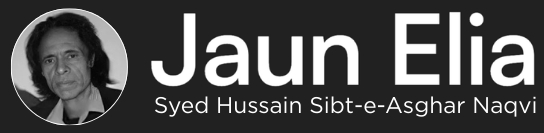
Jaun Elia
Syed Hussain Sibt-e-Asghar Naqvi
14 December 1931 / Amroha, Uttar pradesh, India
8 November 2002 / (aged 70) Karachi, Sindh, Pakistan
Zahida Hina / (m. 1970 div. 1984)
Zeryoun Elia, Sohaina Elia, Fainaana Farnaam
Allama Shafiq Hassan Elia
Shayad / 1990
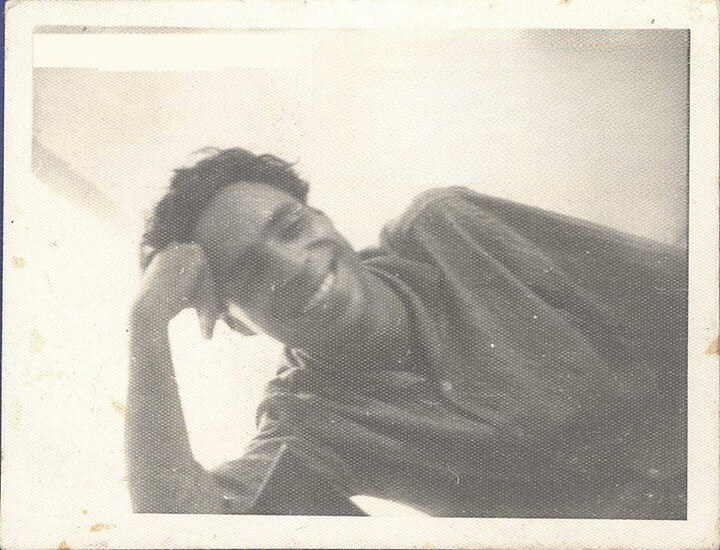
Jaun Elia (1931 – 2002)
Jaun Elia’s full name is Syed Hussain Sibt-e-Asghar Naqvi. Jaun Elia was a prominent Urdu poet, scholar, philosopher, and intellectual, widely regarded as one of the most unconventional and incisive voices in modern Urdu literature. His work is distinguished by deep philosophical inquiry, emotional candor, and a persistent questioning of accepted truths.
Early Life and Education
Jaun Elia was born on 14 December 1931 in Amroha, a historic town in British India renowned for its literary and scholarly culture. He was raised in an intellectually rich environment; his family was deeply engaged with classical learning, religious studies, and philosophy. From an early age, Jaun exhibited exceptional intellectual ability and an intense inclination toward reading and contemplation.
He received traditional as well as modern education and developed expertise in Urdu, Persian, Arabic, and English. His studies extended to classical Islamic philosophy, logic, history, and Western philosophical thought. This broad intellectual foundation played a decisive role in shaping his distinctive worldview and literary voice.
Intellectual Development
Unlike many of his contemporaries, Jaun Elia did not align himself fully with any ideological, religious, or literary movement. He remained a skeptic by temperament, questioning inherited beliefs and cultural certainties. His intellectual restlessness and resistance to conformity became defining features of both his personality and his writing.
Jaun possessed an extraordinary command over classical literary traditions, yet he deliberately challenged their conventions. His poetry reflects a tension between tradition and rebellion, knowledge and doubt, belonging and alienation.
Migration to Pakistan
In 1957, Jaun Elia migrated to Pakistan, settling in Karachi. The experience of migration left a lasting impact on his emotional and intellectual life. He often expressed a profound sense of displacement, loss, and historical disconnection, sentiments that recur frequently in his poetry.
Despite his vast knowledge and literary stature, Jaun remained distant from institutional recognition for much of his life. He lived with a sense of intellectual isolation, which further intensified the introspective and confrontational tone of his work.
Marriage and Family
In 1970, Jaun Elia married Zahida Hina, a noted Urdu writer and journalist, after they met through literary work and shared intellectual pursuits. Their union brought together two insightful minds deeply engaged in Urdu literature and cultural discourse. During their life together, Jaun Elia and Zahida Hina were blessed with three children, including a son and two daughters, who were part of his personal life away from public attention.
Despite their early connection and shared creative interests, differences in temperament and life choices eventually led the couple to separate in the mid-1980s. This period marked a significant emotional phase in Jaun Elia’s life and influenced the depth and sensitivity found in much of his later poetry.
Literary Career
Jaun Elia’s poetry is characterized by its directness, philosophical depth, and emotional vulnerability. He rejected idealized romanticism and instead portrayed love as fractured, uncertain, and deeply human. His verses often address themes of existential despair, unfulfilled desire, intellectual rebellion, and the pain of historical consciousness.
Although he had been writing for decades, his first major poetry collection, Shayad, was published later in life and brought him widespread recognition. Subsequent works, including Yani and Gumaan, solidified his position as a unique and influential literary figure.
Beyond poetry, Jaun Elia was also known for his prose writings, translations, and editorial work. He contributed significantly to literary discourse through essays and critical thought, demonstrating the same intellectual rigor found in his poetry.
Personality and Public Presence
Jaun Elia was known for his sharp wit, uncompromising honesty, and deeply introspective nature. In literary gatherings, his presence was marked by intellectual intensity and emotional frankness. He spoke as he wrote, without pretense, often unsettling, yet profoundly sincere.
Death and Legacy
Jaun Elia passed away on 8 November 2002 in Karachi. In the years following his death, his popularity grew significantly, particularly among younger generations who found resonance in his exploration of doubt, identity, and emotional truth.
Today, Jaun Elia is regarded as one of the most original and fearless voices in Urdu literature. His work continues to be read, studied, and quoted widely, standing as a testament to a mind that refused comfort in certainty and chose instead the difficult honesty of questioning.